GT fishing in Kenya – Best GT fishing spot?
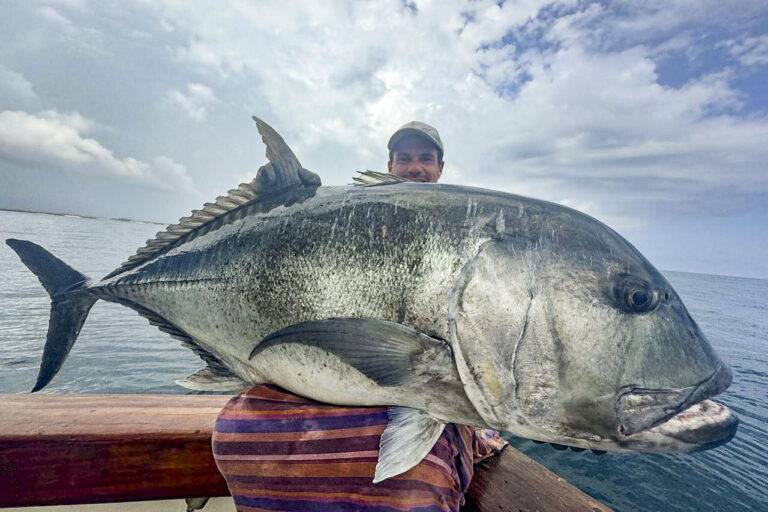
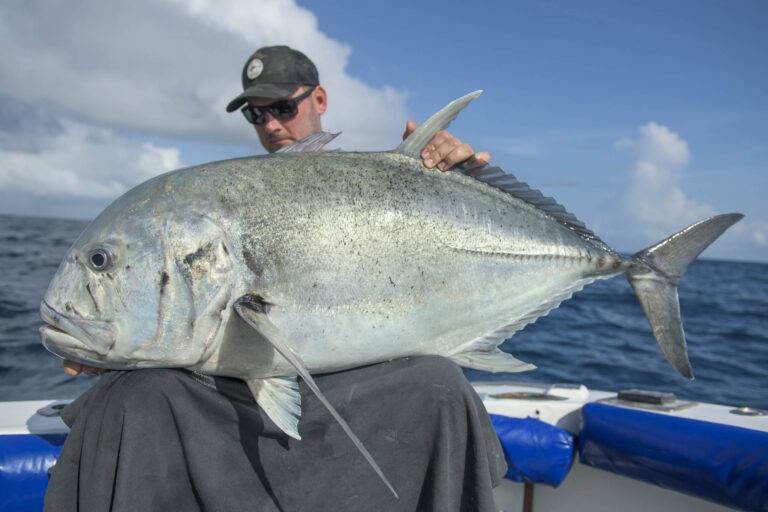
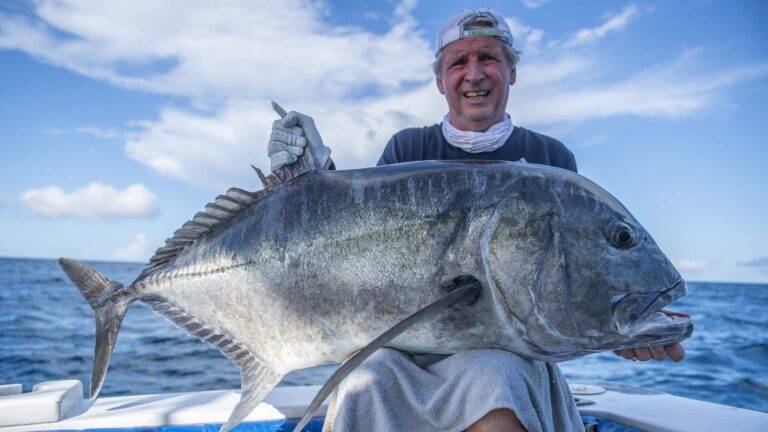
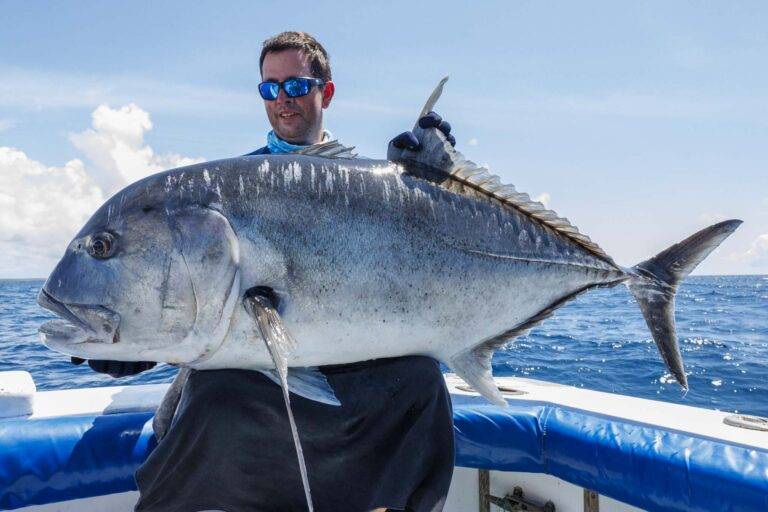
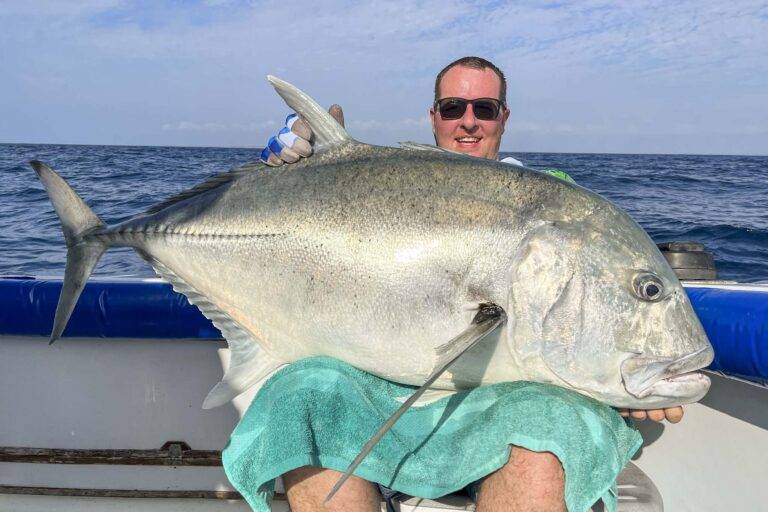
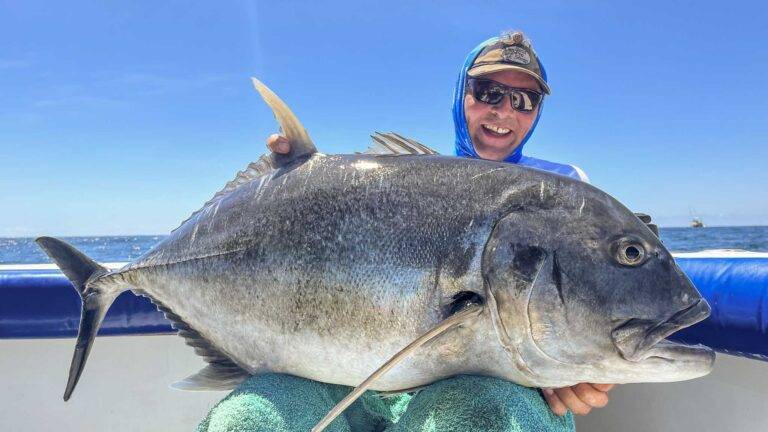
GT fishing in Kenya is now one of the last true adventures in saltwater fishing. Whilst many classic destinations in the Indian Ocean have long been developed, the north coast around Lamu has, in recent years, emerged as one of the most exciting and, at the same time, unspoilt GT regions in the world. Here you’ll find a combination of pristine reefs, strong currents and a fish population that is not only abundant but, above all, of substantial size.
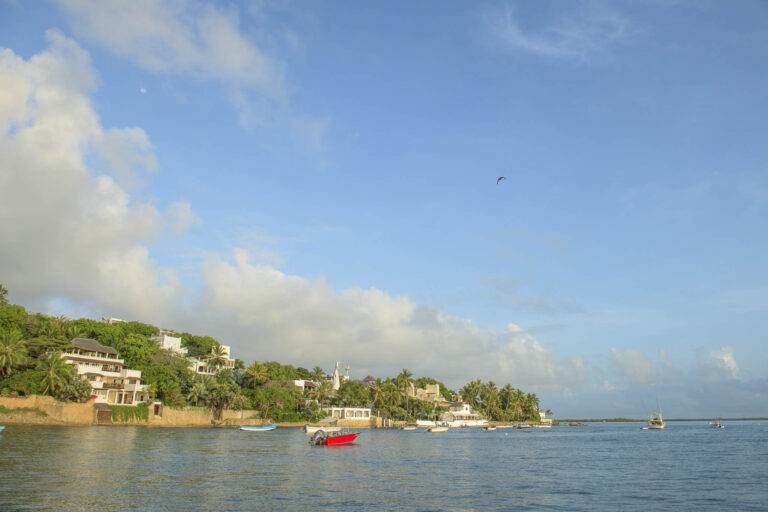
GT fishing off Lamu
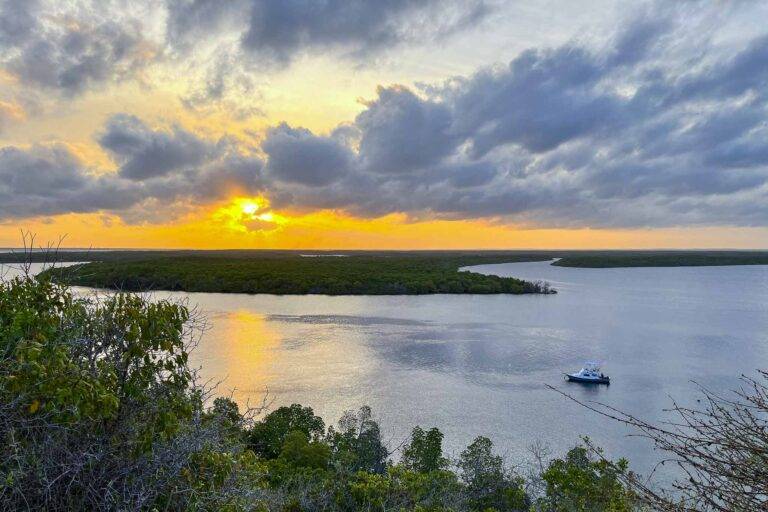
At the heart of this fishing destination lies Lamu Island – a place that stands in stark contrast to the rest of Kenya. The journey there is part of the experience in itself. Following an international flight, usually via Europe to Nairobi, a domestic flight takes you from Wilson Airport directly to the north coast. From there, you continue by boat to Shela, a small Swahili village that serves as the base for your fishing trips.
This secluded location is one of the key factors behind the quality of the fishing: little fishing pressure, virtually no industrial influence and vast, virtually untouched stretches of coastline.
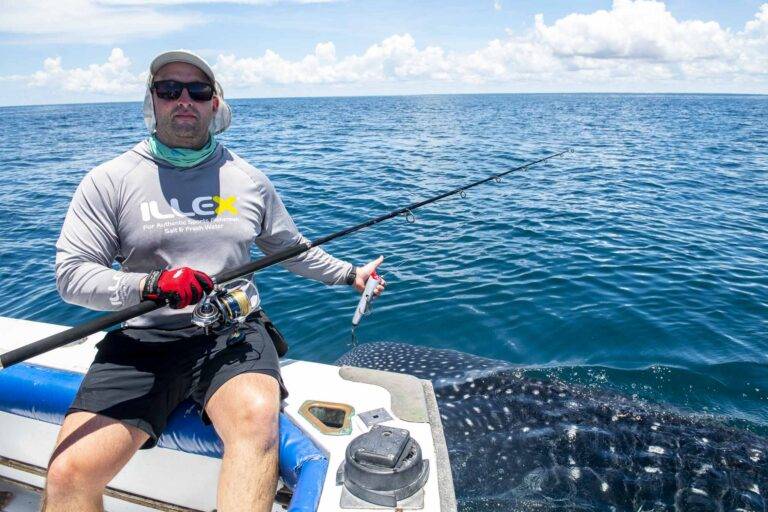

The best techniques for GT fishing
The fishing days themselves are long and intense. The day usually starts early in the morning, and you spend a good ten hours out on the water.
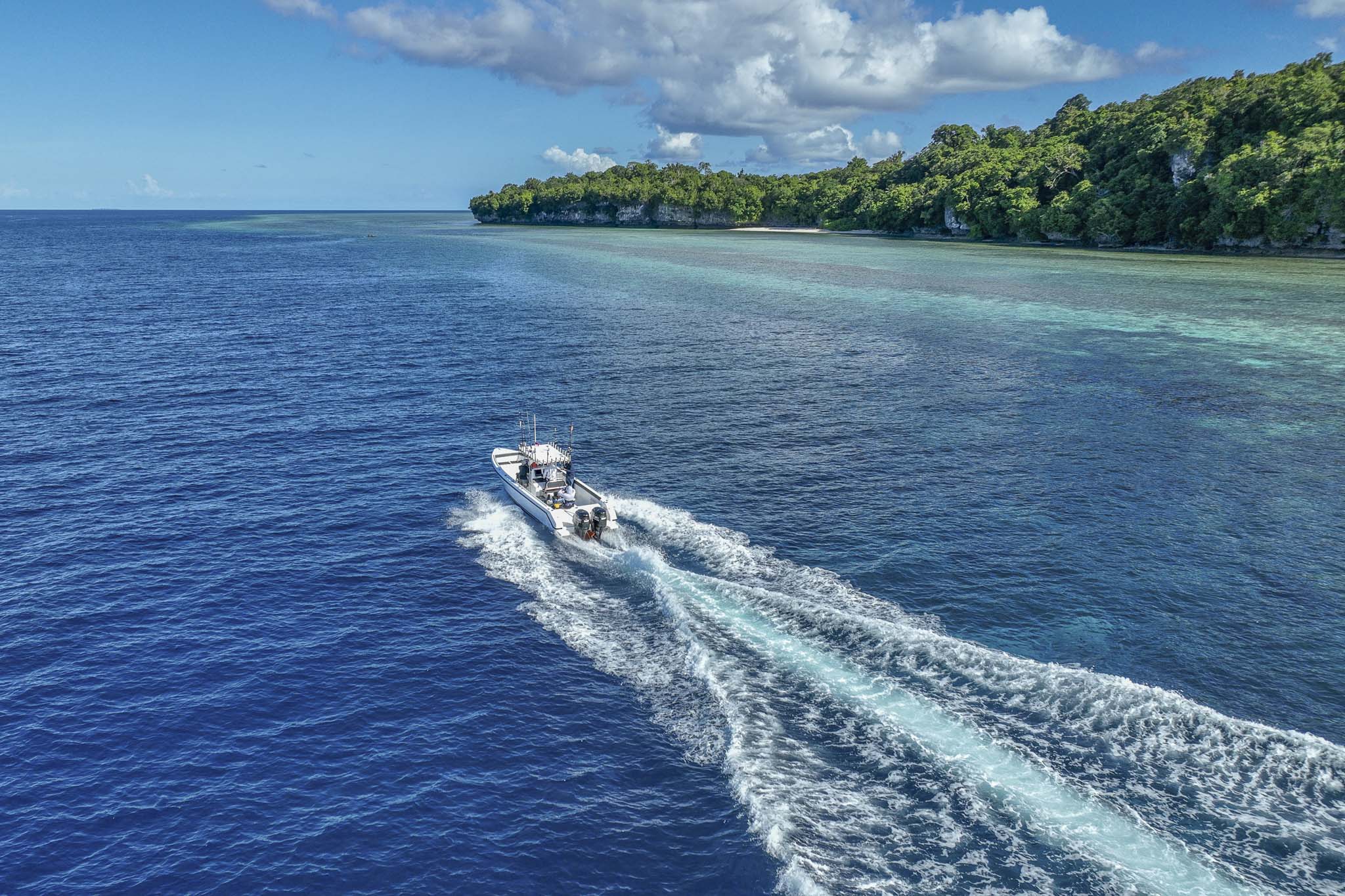
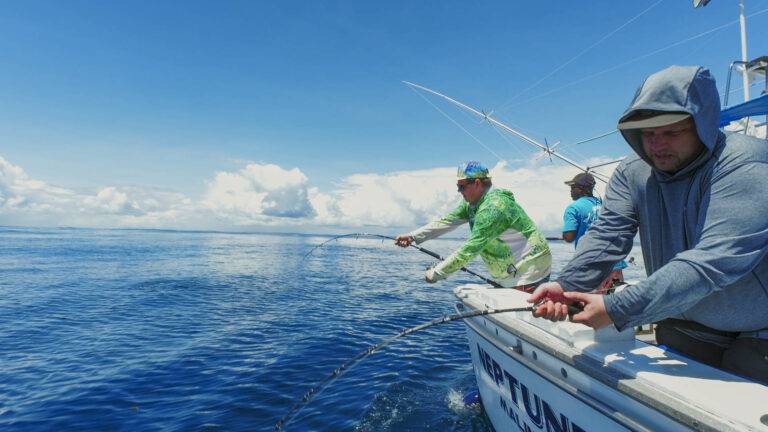
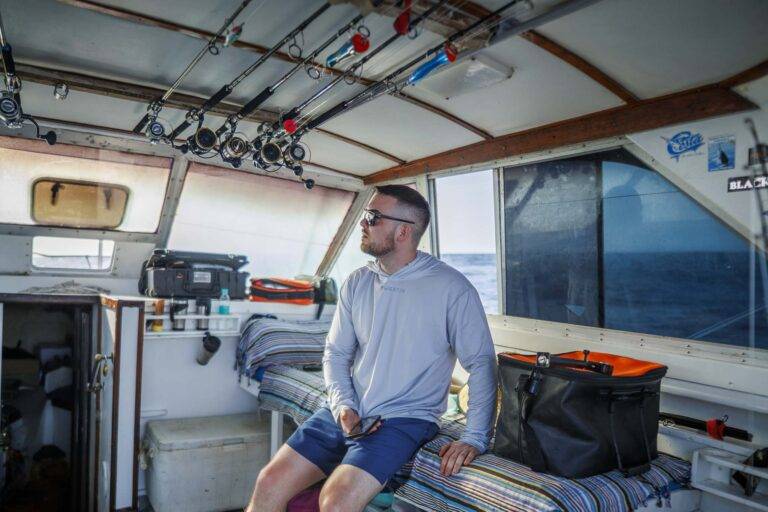
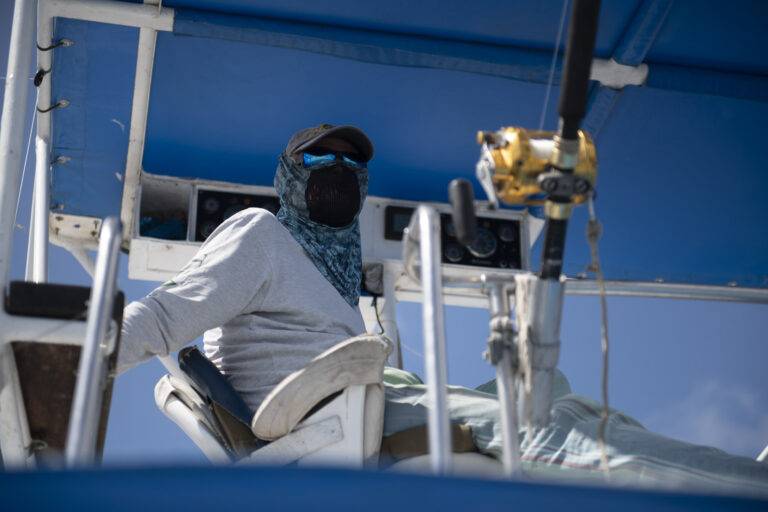
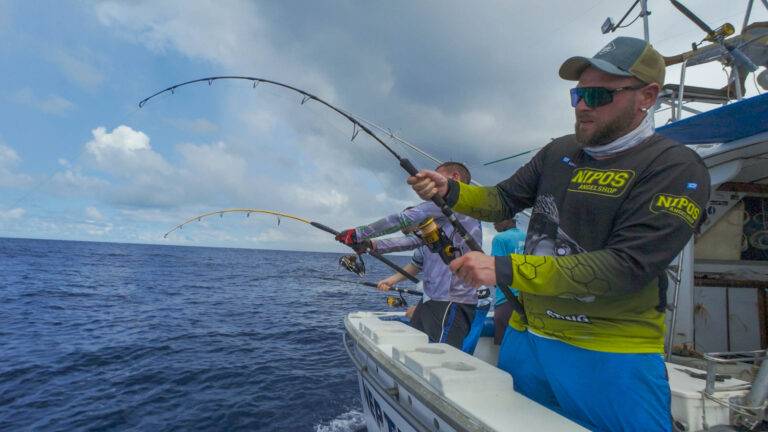
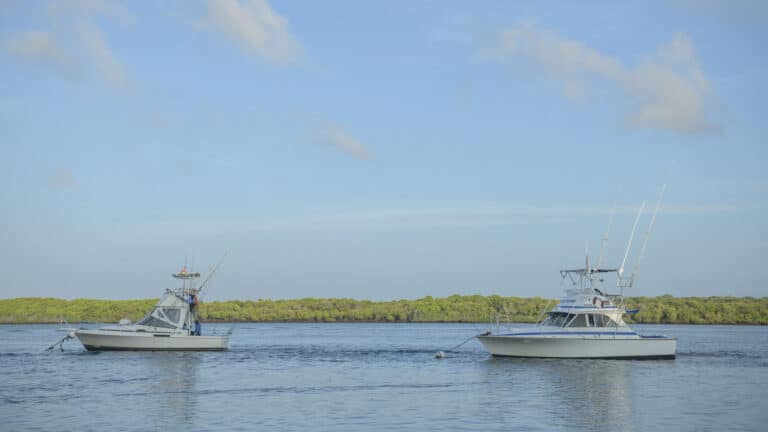
When fishing for GT in Kenya, classic big-game boats are used, which offer enough space to cast simultaneously and move flexibly between spots. Mobility plays a crucial role here, as the best spots are often far apart – one reason why trolling is regularly carried out whilst travelling between spots, which opens up additional opportunities for marlin or sailfish.
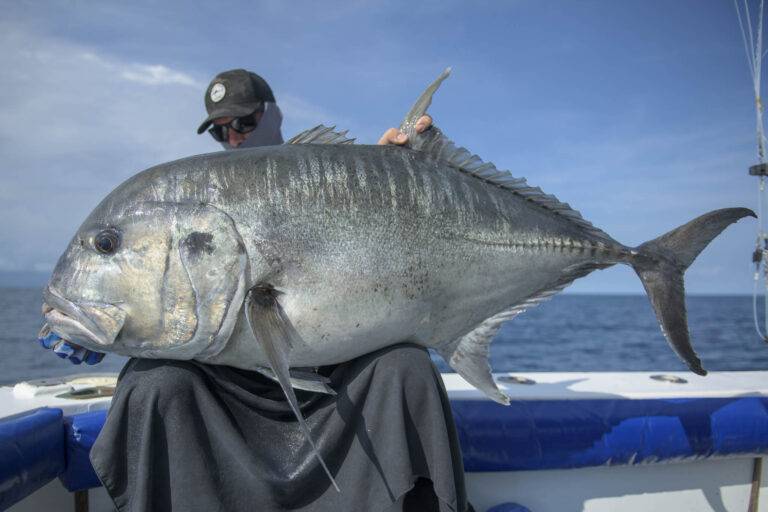
However, the focus is clearly on the giant trevally. Fishing in Kenya is mainly based on two methods: popping and jigging.
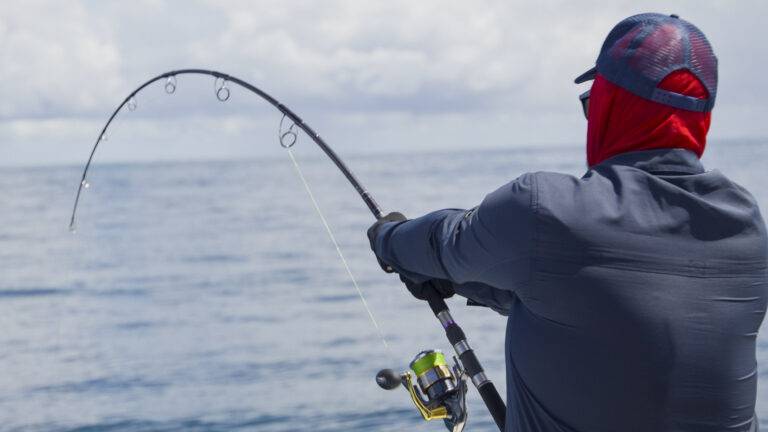
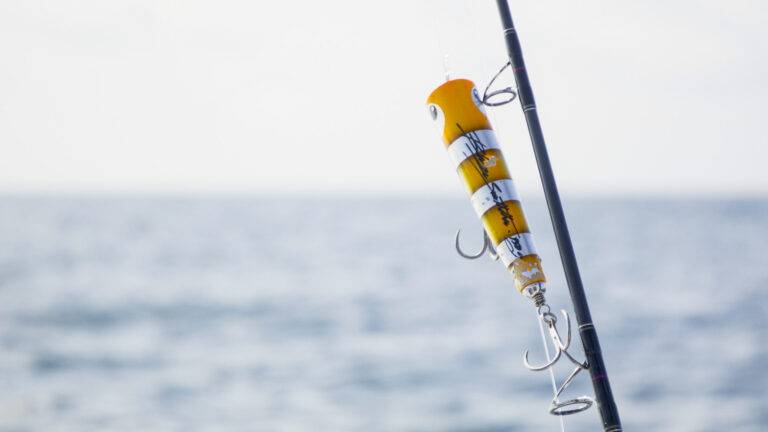
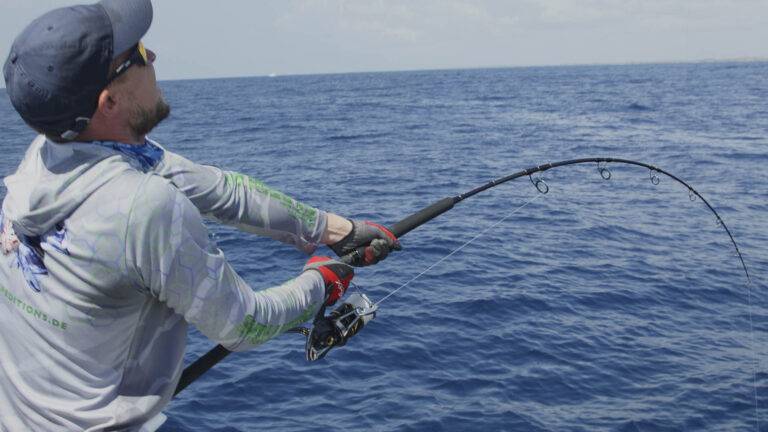
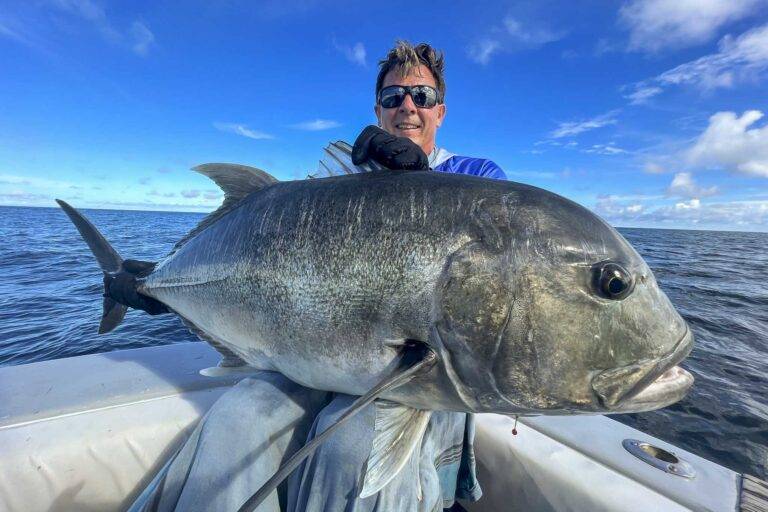
Popping and jigging for GT
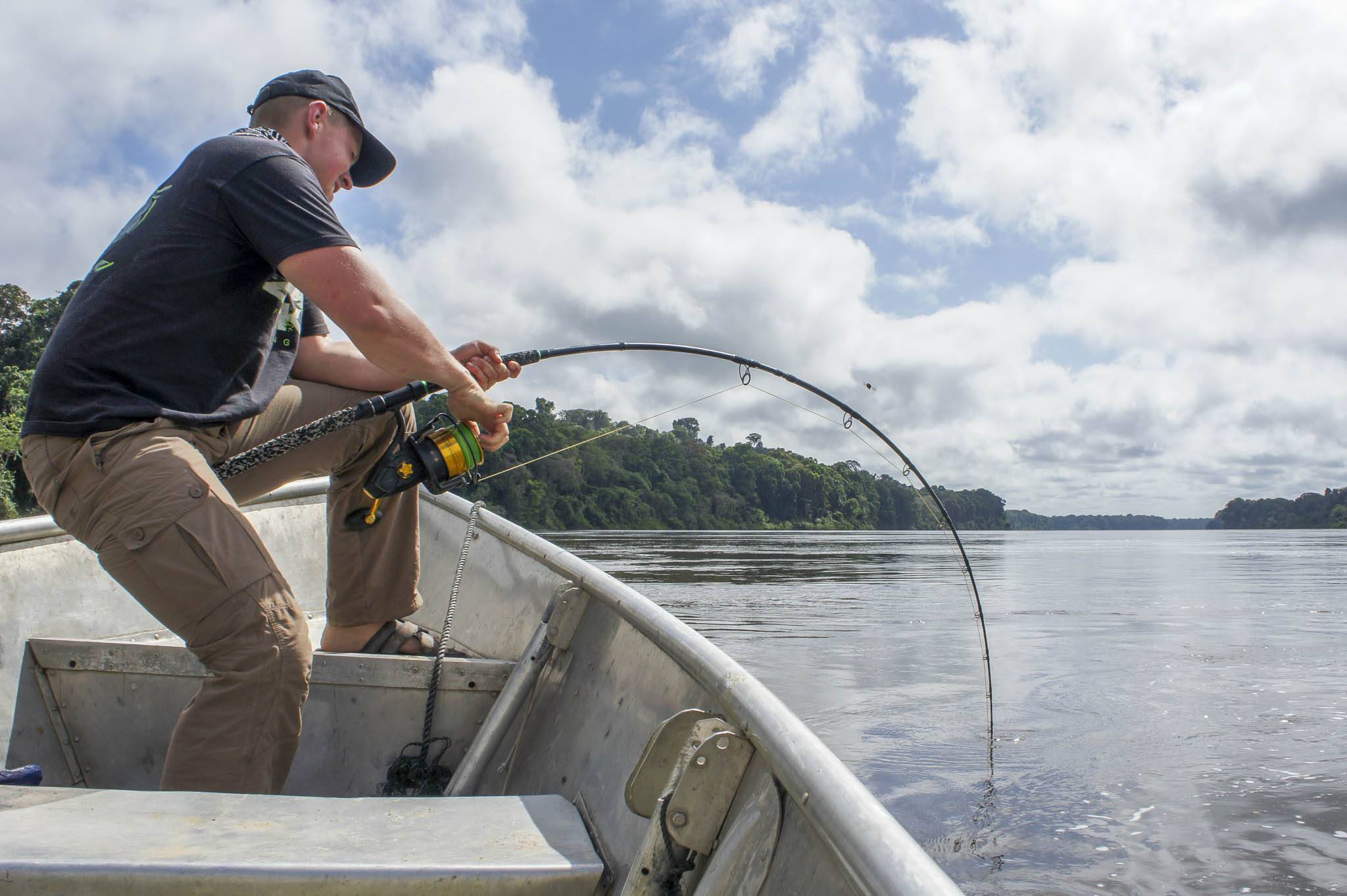
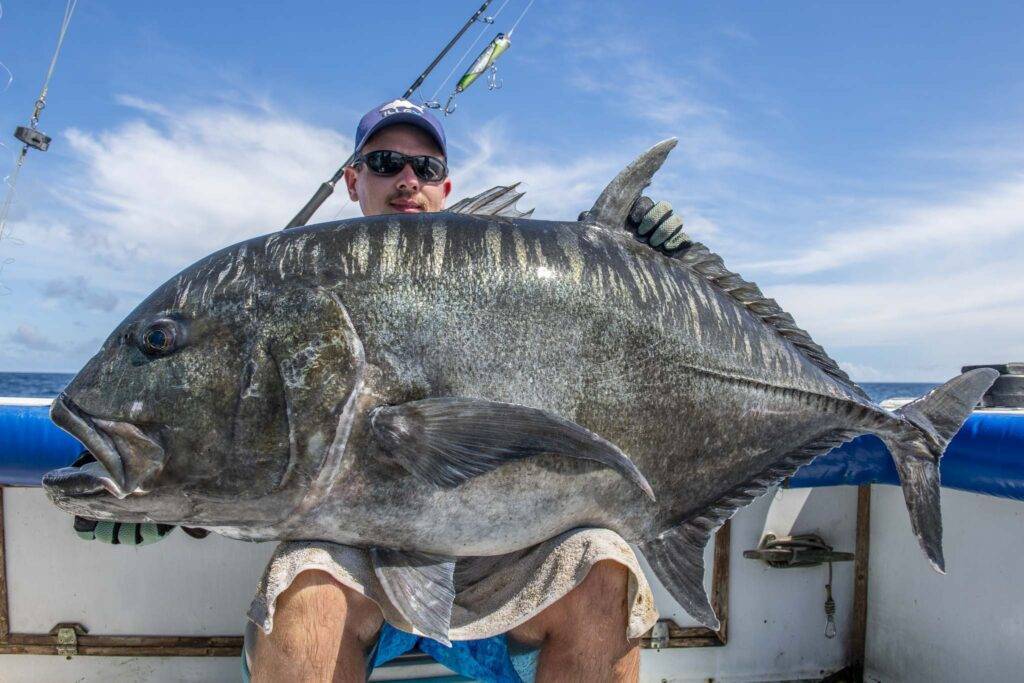
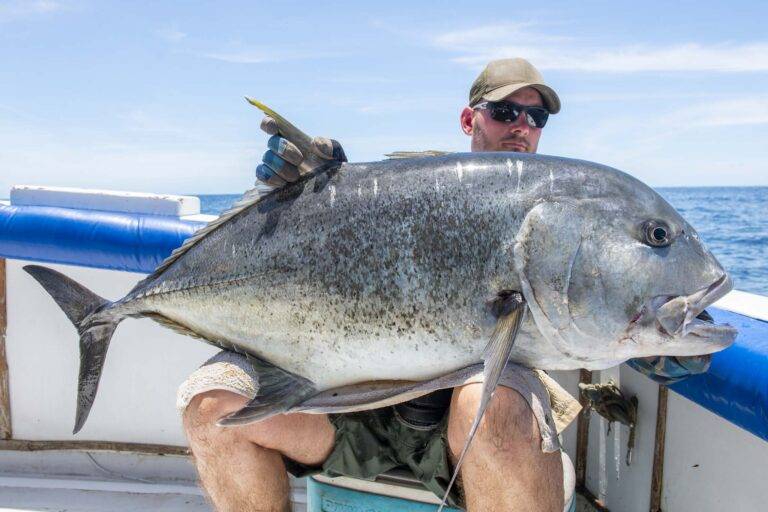
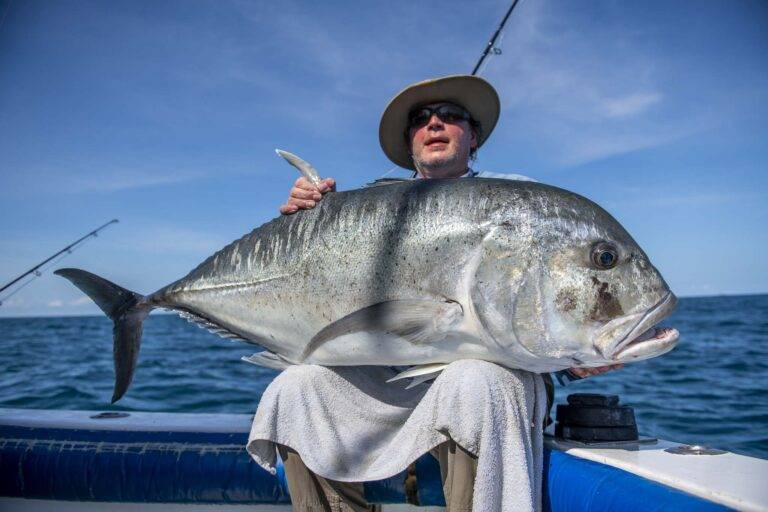
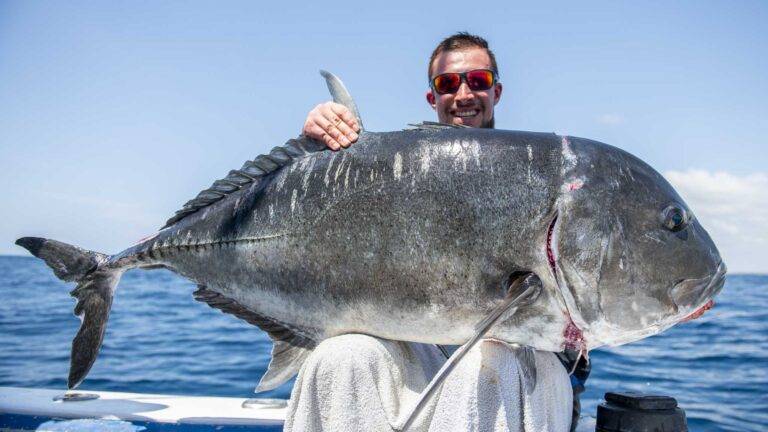
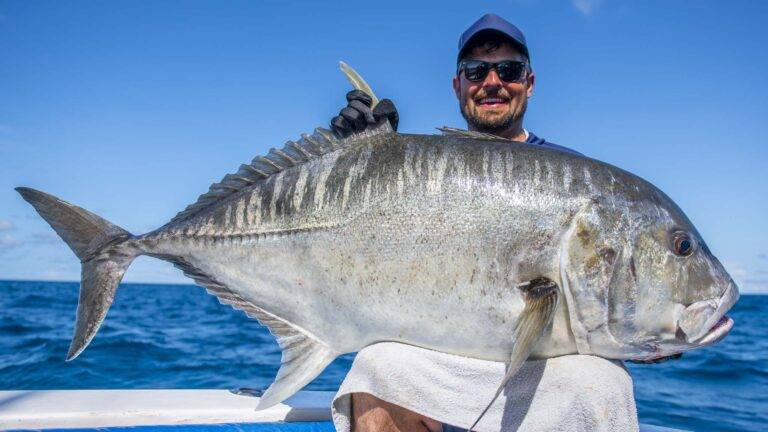
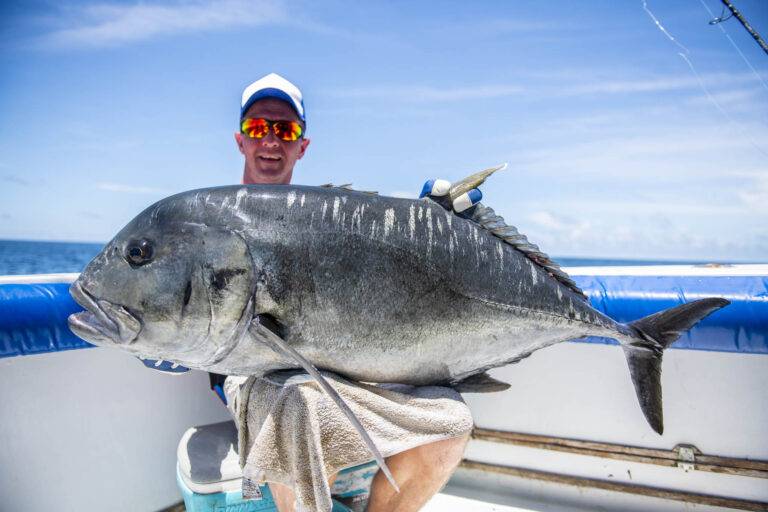
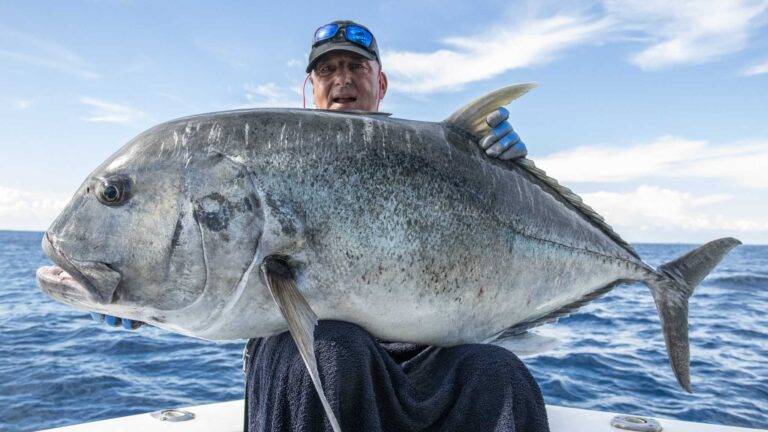
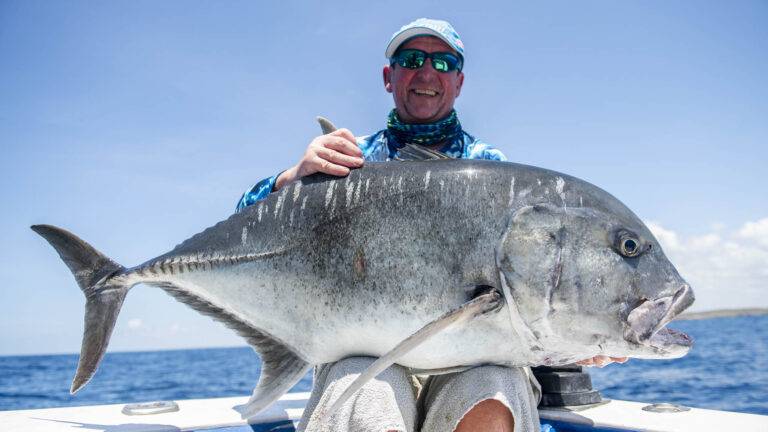
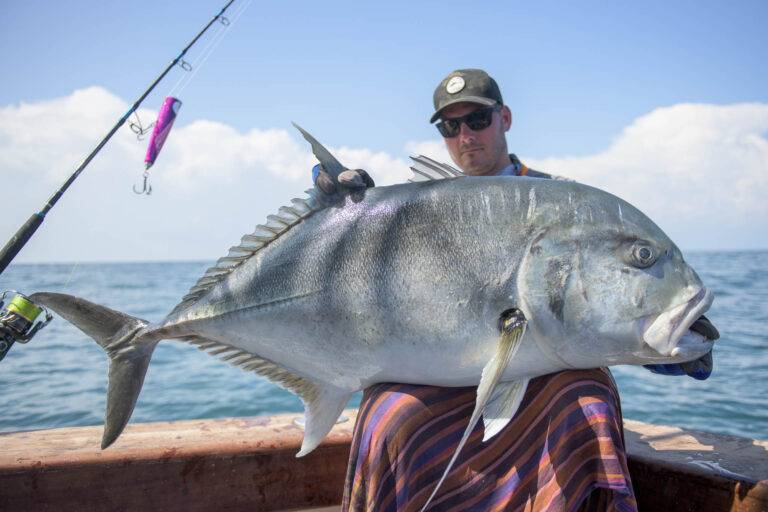
When fishing for GT in Kenya, and particularly when popping, anglers use large surface lures that are worked aggressively to create massive pressure waves. In recent years, fish weighing well over 50 kilos have been caught here on a regular basis – a clear indication of the quality of this fishing ground.
Jigging, on the other hand, is mainly used in deeper areas, often along edges or over offshore structures. Here, heavy metal jigs are worked vertically to entice even sluggish fish at greater depths. The combination of both methods is what makes this destination so appealing, as it allows anglers to fish a wide variety of conditions effectively.
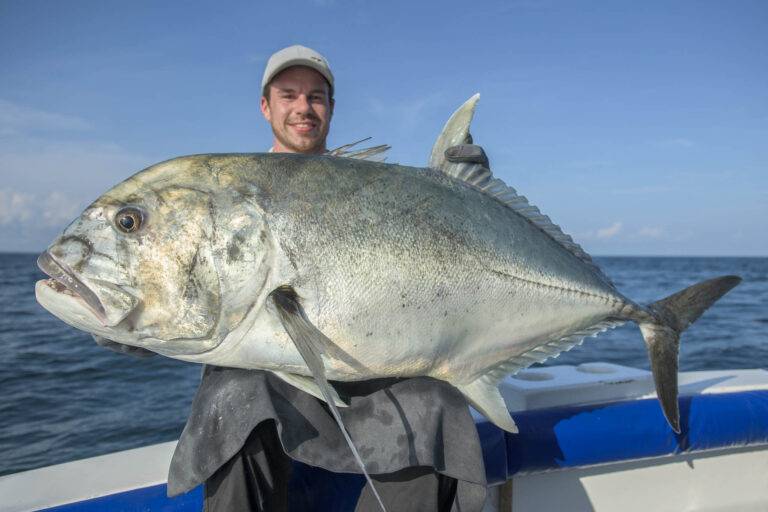
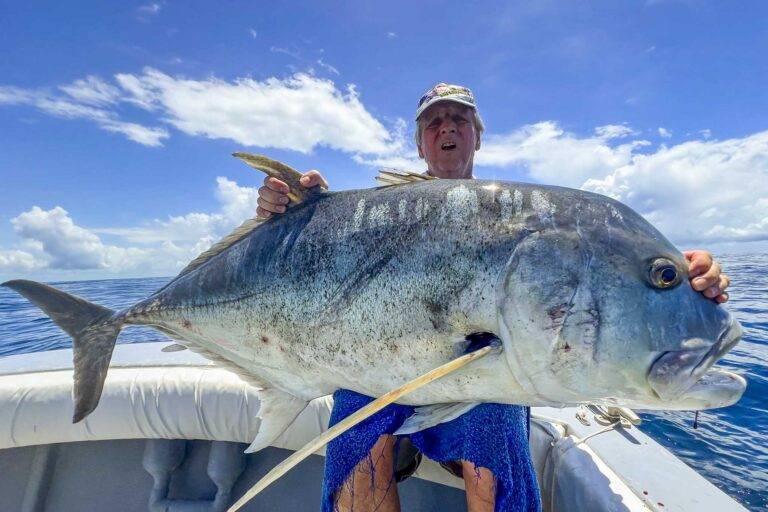
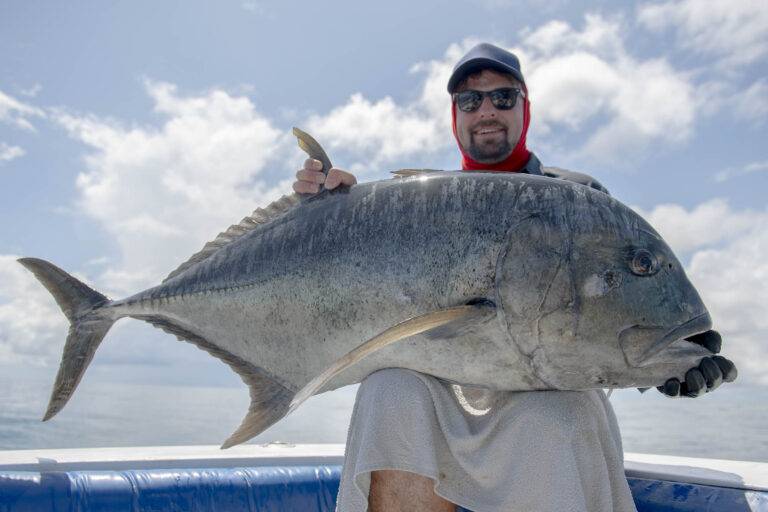
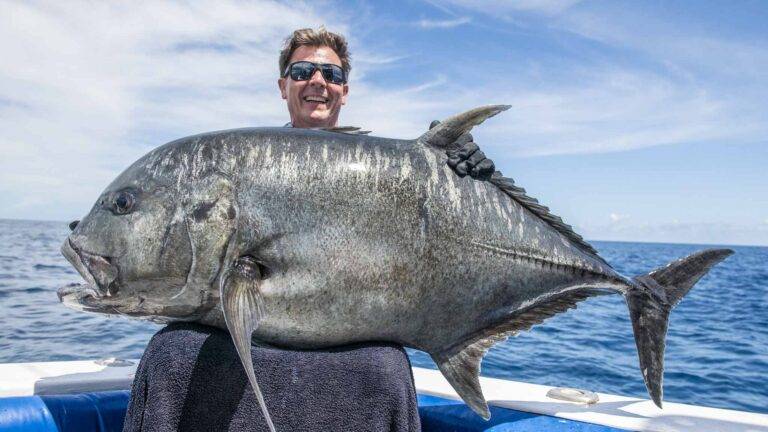
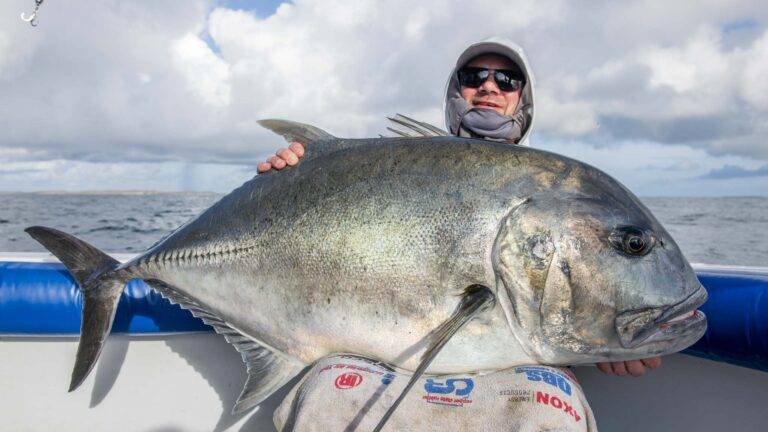
The best tackle for GT fishing
The tackle is equally uncompromising. Anyone fishing for GT in Kenya is dealing with absolute heavy tackle. For popping, strong PE10-class rods are used, combined with high-performance reels in sizes 14000 to 18000. Fishing is done with braided lines of around 100 lbs breaking strain and leaders in the 220 to 240 lbs range.
The lures used for GT fishing in Kenya are also sized accordingly: large poppers from around 20 cm in length and weighing 150 to 180 grams are standard.
When jigging, the tackle is slightly lighter, but still of an extremely high standard. Here, PE6 to PE8 rods are used, combined with powerful reels and lines of around 80 lbs. The jigs usually range from 100 to 250 grams, with shape and colour varying depending on the current and depth.
One thing is particularly important: absolute reliability of the equipment. GTs are among the most powerful fighting fish of all, and any weaknesses in the setup will be mercilessly exposed. You can find good tackle for GT fishing in Kenya here: GT Fishing.com
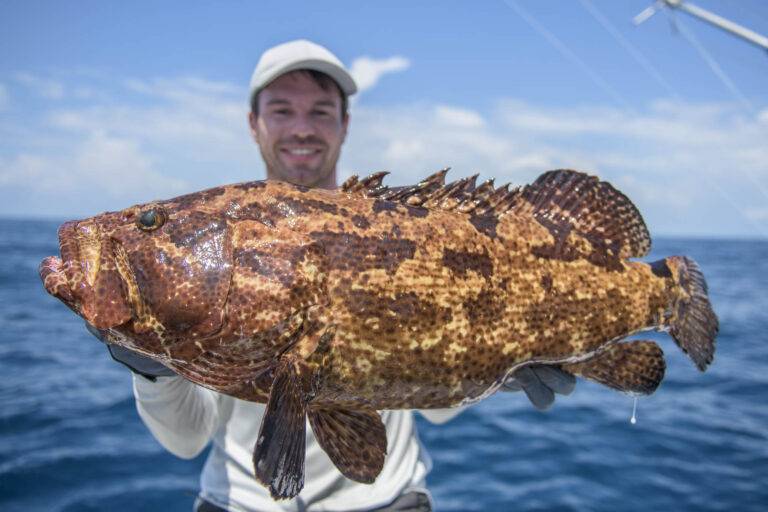
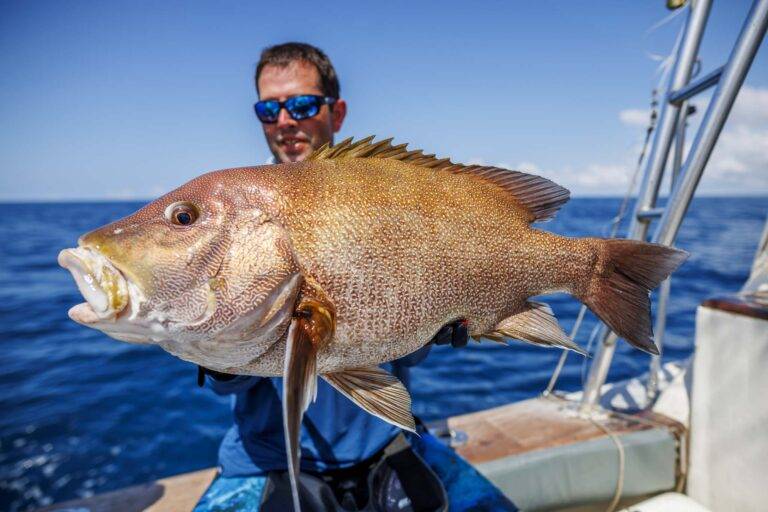
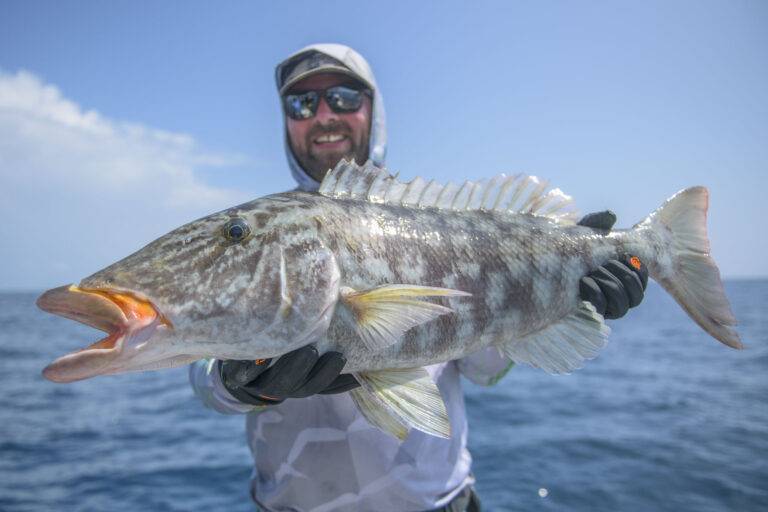
Biodiversity in Kenya
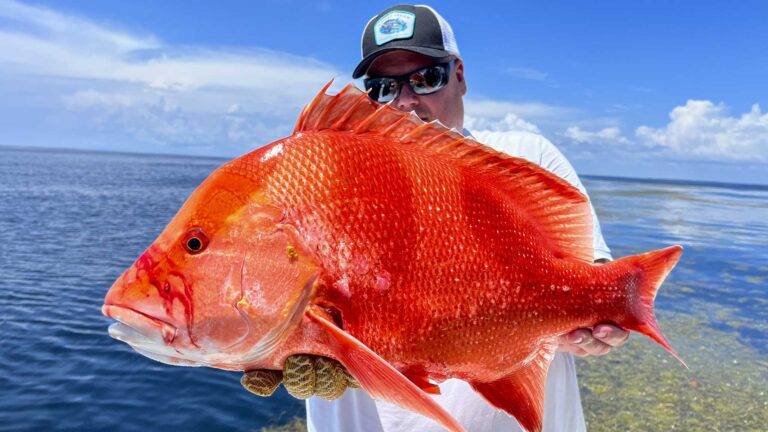
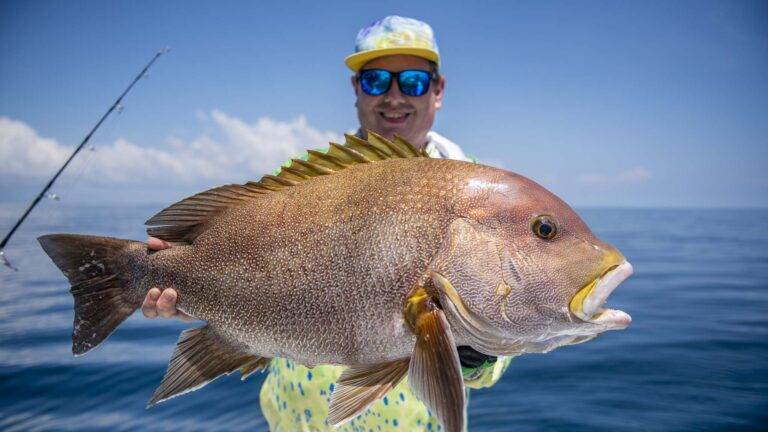
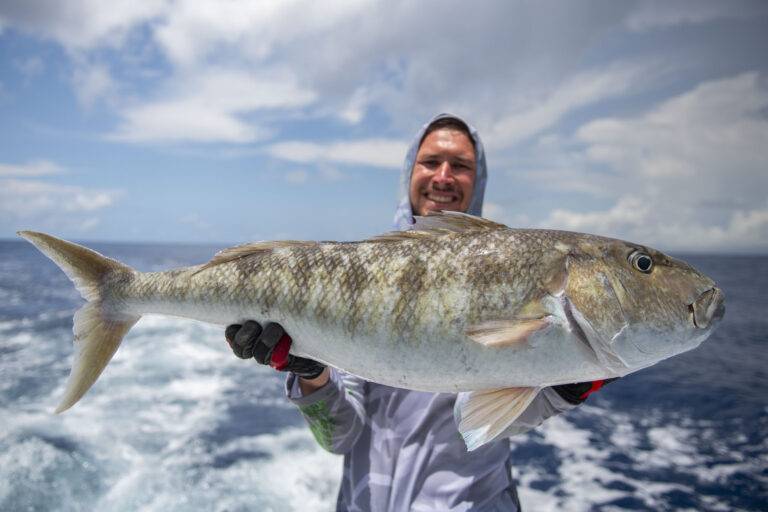
As well as GT fishing in Kenya, there is also an impressive variety of species. When jigging and trolling, you can regularly expect to catch grouper, snapper, amberjack and various species of trevally.
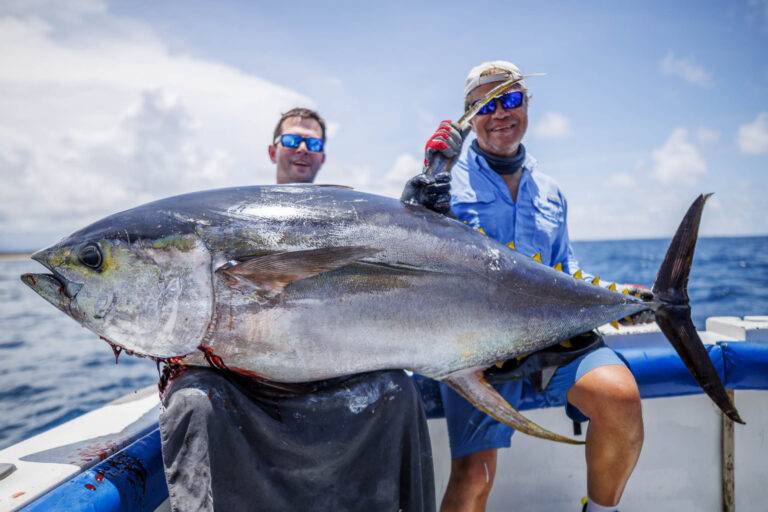
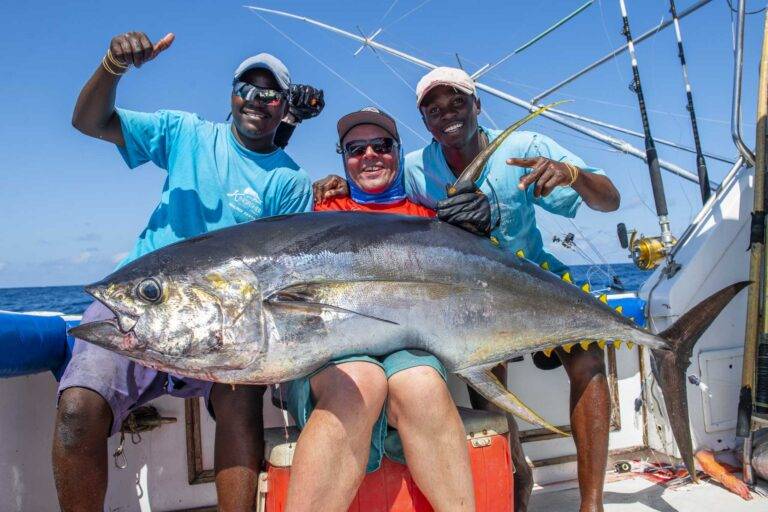
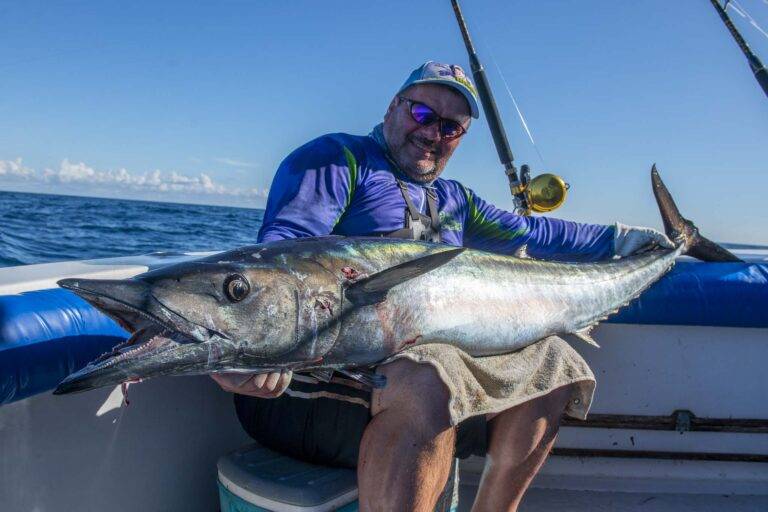
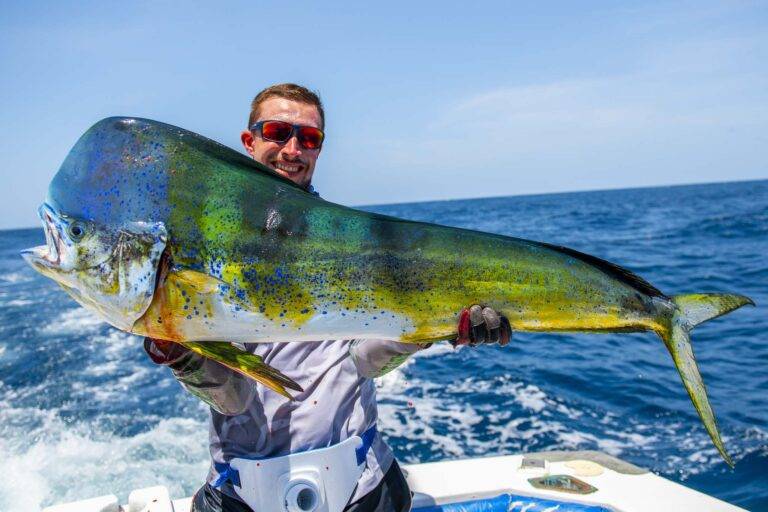
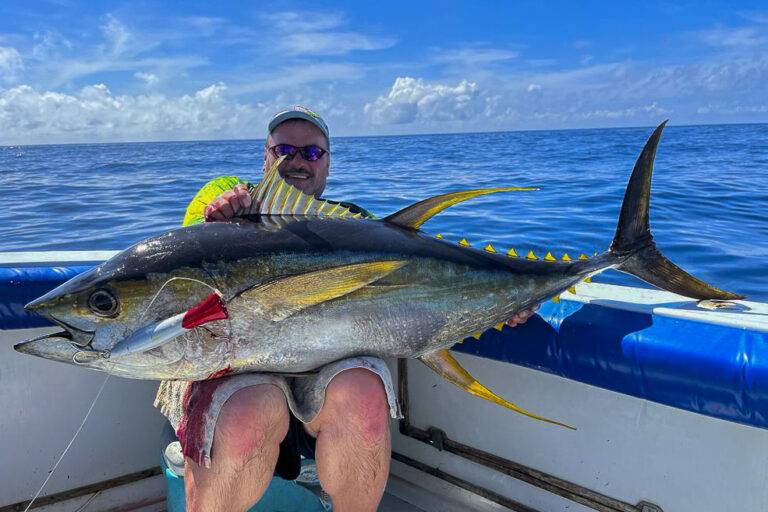
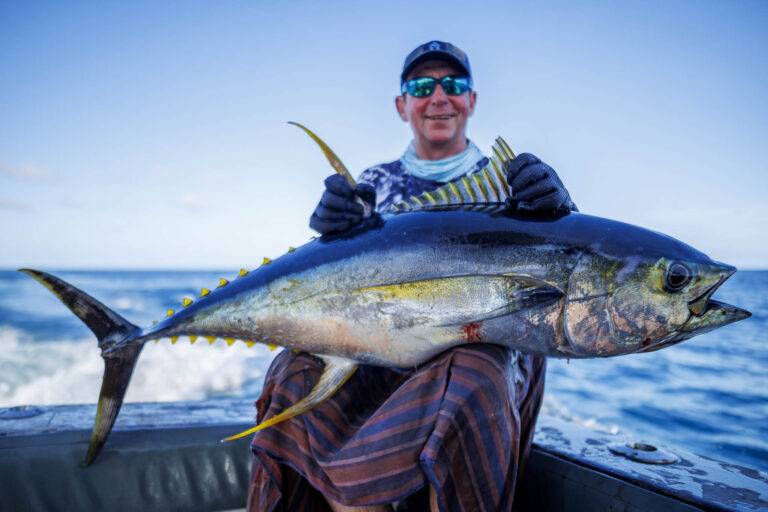
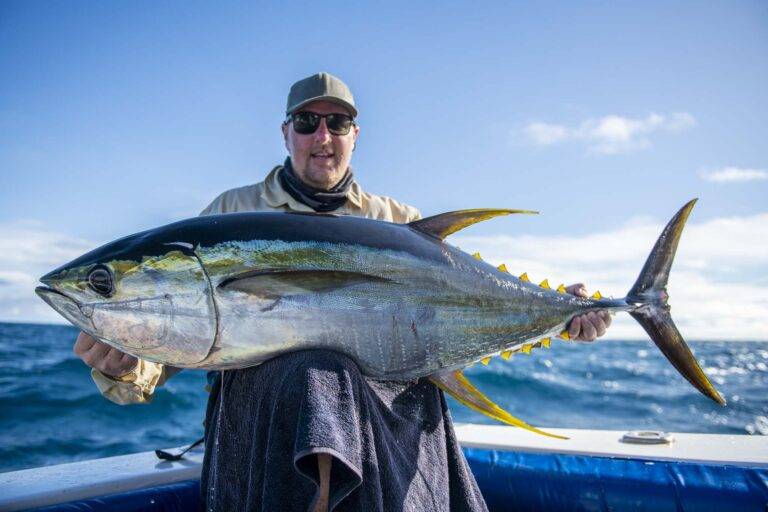
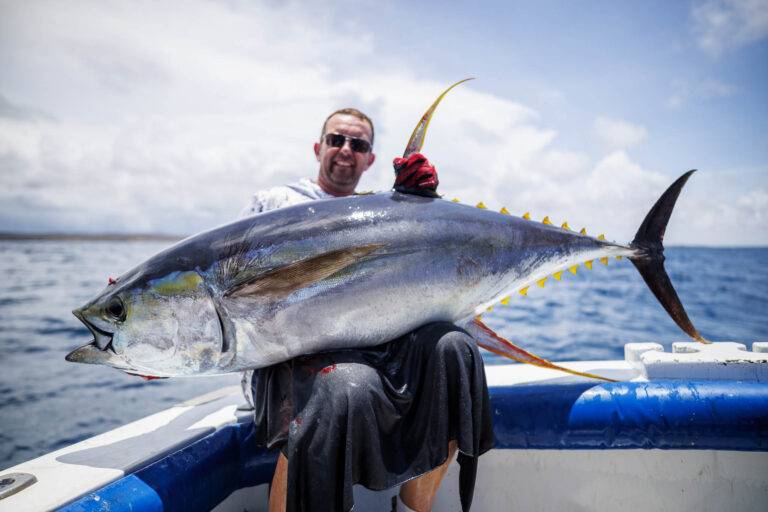
In open water, depending on the season, wahoo, mahi-mahi and, particularly in March, tuna are also caught. These are joined by true big-game classics such as sailfish and marlin, which are frequently caught when moving between spots.
When is the best time for GT fishing in Kenya?
The seasonal comparison for GT fishing in Kenya between March and November is particularly interesting. In terms of GT fishing alone, there is little difference – the fish are present all year round and can be caught using both poppers and jigs.
The main difference lies in the by-catches and the overall fish composition.
In March, Kenya is in a phase where marlin and large tuna are particularly abundant. Conditions can be spectacular when the current and weather are right. This makes this period particularly interesting for anglers who, in addition to GT, also want to target large pelagic fish.
In November, the picture changes significantly. Marlin are rarely seen at this time, but one of the best sailfish seasons of the year begins. At the same time, kingfish become more common, whilst tuna are less frequent and generally smaller.
The jigging depths also differ: whilst fishing is often done at greater depths in March, the spots in November are sometimes significantly shallower, which makes fishing somewhat more varied.
Conclusion – GT fishing trip in Kenya
All in all, Kenya – and Lamu in particular – is a destination for experienced anglers who are specifically seeking an unspoilt yet extremely productive giant trevally fishing experience. The combination of heavy tackle, aggressive techniques and a real chance of landing exceptional fish makes this region one of the last true hotspots for giant trevally worldwide.
Would you like to go to Kenya too?
Here you can find our fishing packages in Kenya: Fishing Kenya – GT Fishing | Andree’s Expeditions